Until recently, workplace ergonomics in welding shops was often regarded as an added benefit—valuable, but not essential compared to core technological requirements. Today, this mindset is changing rapidly. Modularity, flexible configurations, and ergonomic workstations are becoming the foundation of modern, sustainable industrial production.
Ergonomics: not a trend, but an operational necessity
The importance of ergonomics is confirmed by both current European data and global labor market analyses. According to the Eurostat report “ESAW – Accidents at Work” (2024), musculoskeletal disorders remain one of the leading causes of sickness absence in the industry across the European Union.
Similar conclusions are presented in the “Future of Jobs Report 2025,” published by the World Economic Forum. The report points out that an aging workforce and a growing shortage of skilled operators will force the adoption of production solutions that adapt to the worker—not the other way around.
In this context, ergonomics is no longer just a health and safety issue. It becomes a real factor influencing: production continuity and stability, operator availability and efficiency, process quality and repeatability, as well as the costs of absenteeism and employee turnover.
Hydraulic height adjustment for welding tables
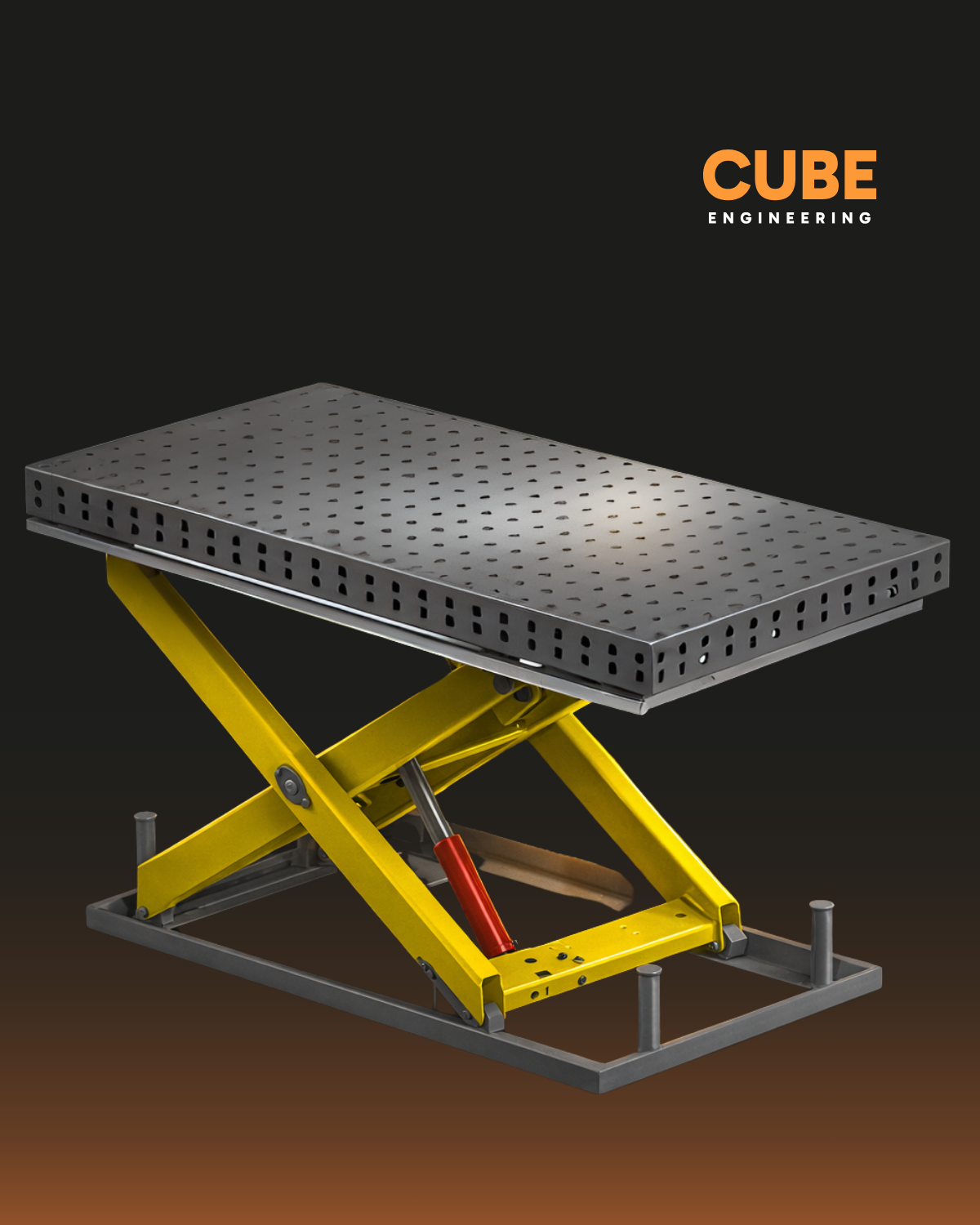
At the beginning of the year, the CUBEWELD range was expanded to include workstations with hydraulic height adjustment, meeting the growing demands of manufacturing facilities for ergonomics, safety, and modern workplace standards.
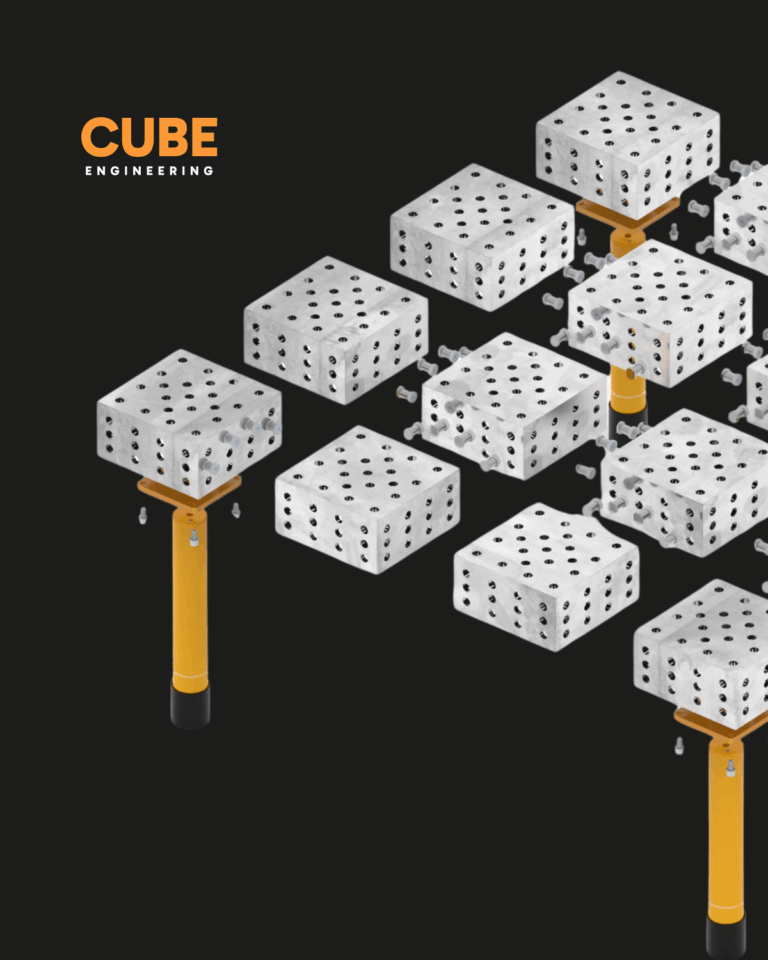
Hydraulic height adjustment for welding tables is a solution that significantly improves ergonomics and flexibility in workstation organization. Welding stations equipped with a hydraulic lifting system require electric power and are operated via a convenient button, allowing for quick and precise height changes of the tabletop without interrupting work. The operator can easily adjust the working position to suit the current task, workpiece size, and personal preferences, reducing strain and enhancing comfort during welding.
The hydraulic actuator used operates within a wide range—from 400 mm above floor level at its lowest setting to 1550 mm at its maximum height. This broad adjustment range allows the station to be used both for tasks that require a low workpiece position and for jobs where working at an elevated height is more convenient.
Efficiency, flexibility, and multi-shift production
Hydraulic height adjustment is much more than just improved ergonomics. In practice, it also means: reduced changeover times, faster adaptation of the workstation to changing product ranges, better use of workstations in multi-shift operations, and the ability for operators of varying heights and experience levels to work efficiently.
The hydraulic height adjustment system fits perfectly into the modular philosophy of CUBEWELD, enabling quick adaptation of the workstation to rapidly changing production needs.
All signs point to ergonomics becoming a market standard in the coming years, rather than a competitive advantage. Companies that are already investing in operator-friendly solutions are building not only safer, but also more resilient and flexible production organizations.