A modern welding workstation is a key element of efficient production. Its design affects not only weld quality, but also work efficiency, operator ergonomics, and shop floor safety. So how do you organize a space that meets current production demands and is ready for future challenges? The answer is modularity in welding workstations.
Modular workstation – flexibility without compromise
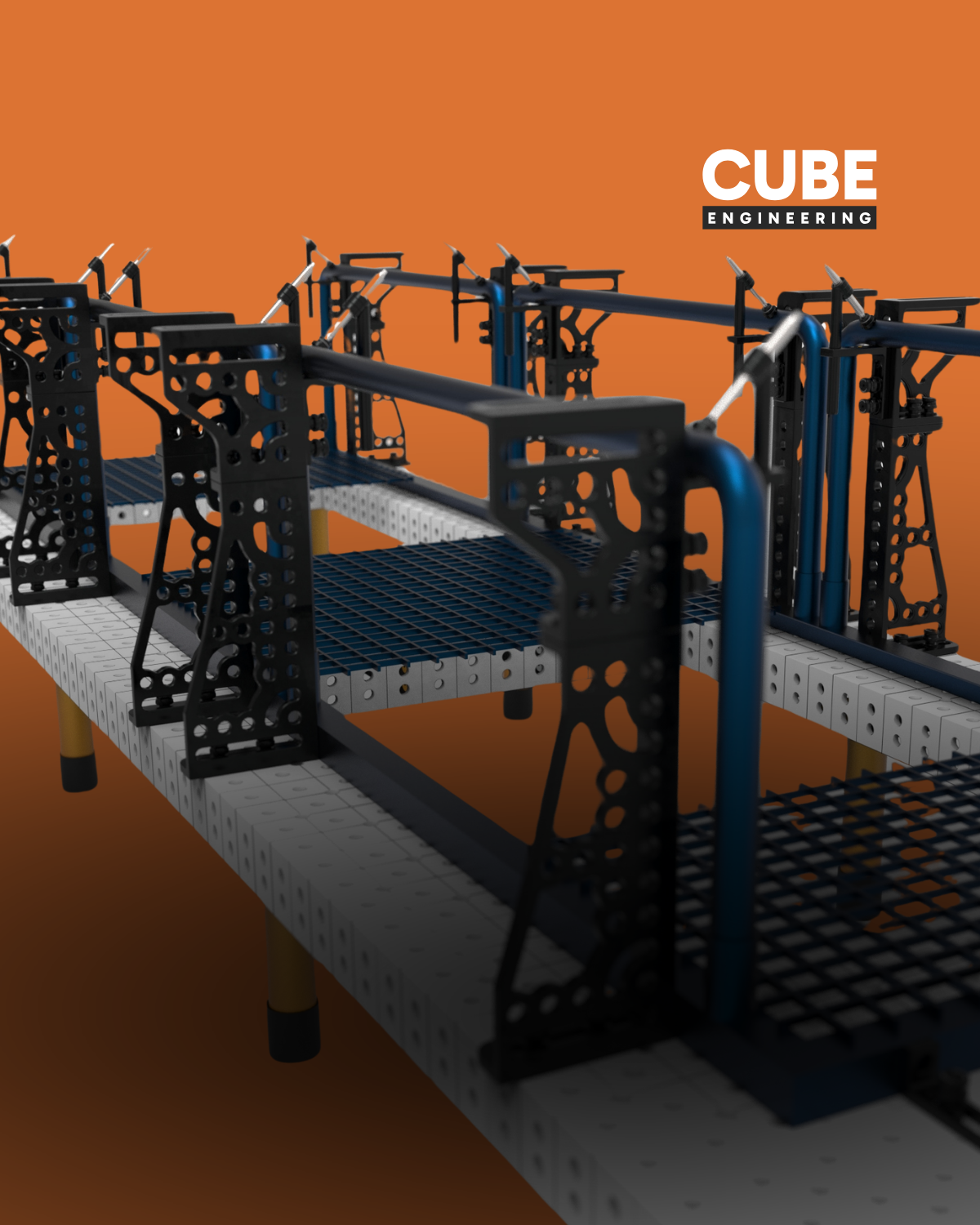
As production needs change rapidly, more and more modern factories are turning to modular welding workstations. A system based on repeatable components allows you to freely configure the workstation according to current orders and the type of parts.
Unlike traditional tables or stations dedicated to a single product, modular solutions offer high flexibility and allow for quick retooling. This means one workstation can handle many types of parts, which is especially important in single-piece and small-batch production.

Where to start when designing a welding workstation?
The first and most important step is to analyze the technological process. A properly designed welding station should take into account the type of welded components, their dimensions, weight, and the level of production repeatability. It’s equally important to determine the number of operations performed on a single part and the welder’s working time.
Only with this data can you design the right layout and geometry for the station. This approach helps avoid design compromises and genuinely increases production efficiency.
Workstation ergonomics and weld quality
The ergonomics of the welding station have a direct impact on the quality of the welds. A welder working in a natural, stable body position can maintain high precision and focus for longer periods.
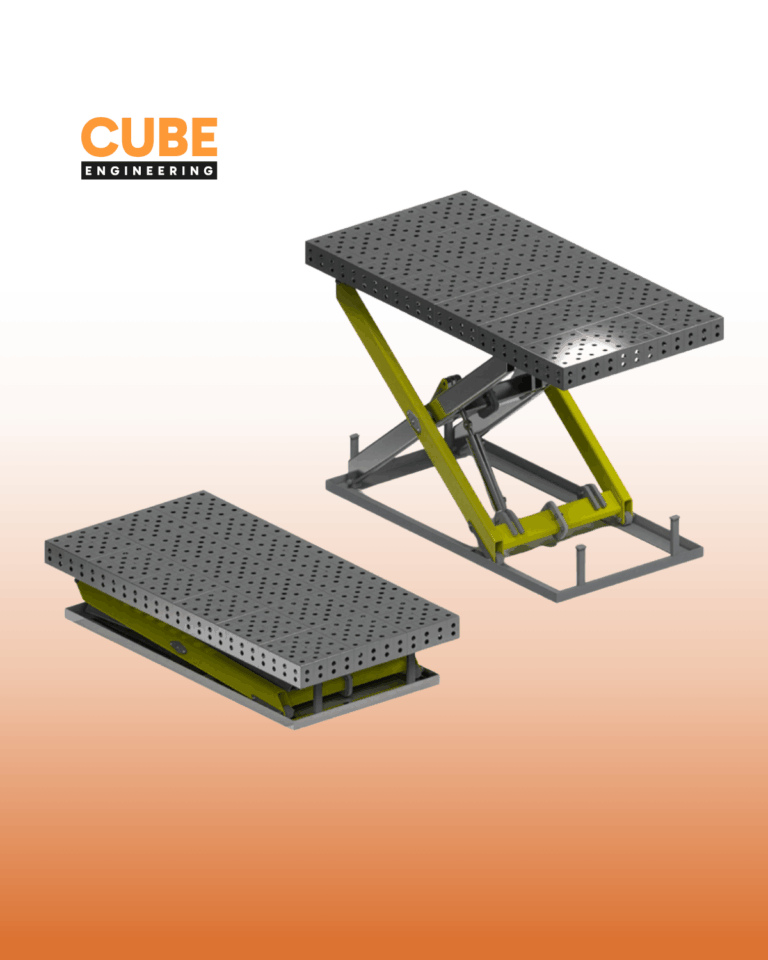
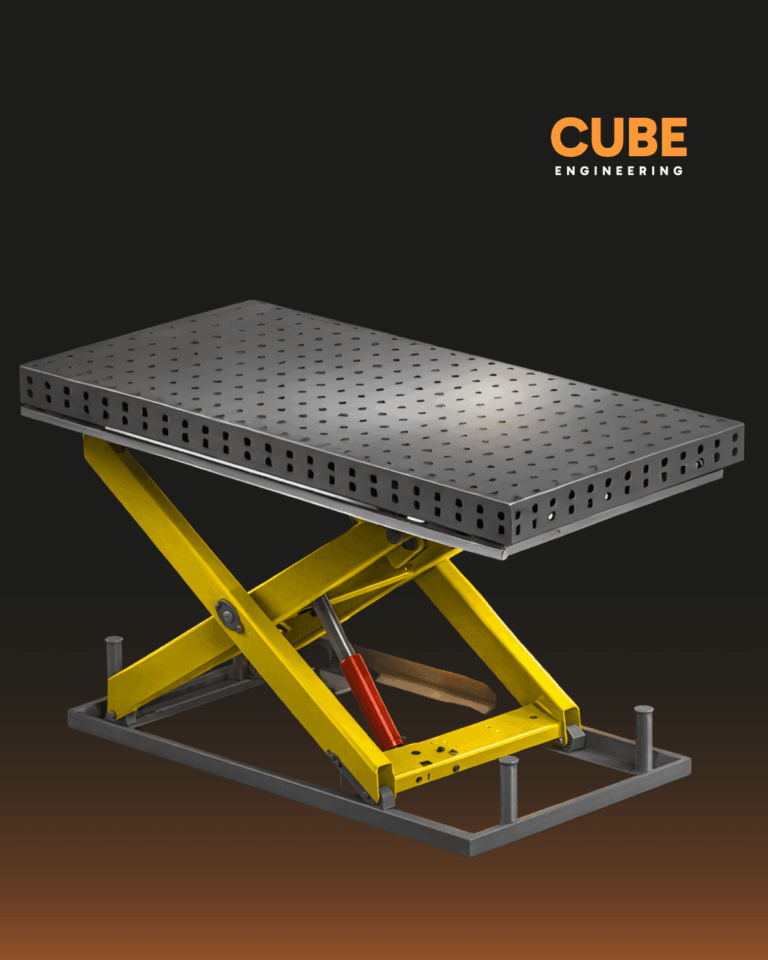
Key factors here include adjustable table height, proper positioning of the workpiece, and easy access to the welding area. These solutions reduce operator fatigue and minimize the risk of errors. The CUBEWELD system also allows for custom table shapes, such as U-shaped or with an open space in the center, which further enhances workplace ergonomics.
Precision and repeatability
The precision of the welding station is the foundation of process repeatability. The rigid table structure, precisely machined reference elements, and resistance to thermal deformation help maintain the part’s geometry after welding. This is crucial for both serial production and when preparing the station for automation or robotics.
The higher the station’s accuracy, the less material waste and the lower the production costs. That’s why the CUBEWELD system uses DURONEX 1200 steel, offering up to 700% longer lifespan compared to tables made from S355J2+N steel. Additionally, a base hardness of ≥ 42 HRC ensures the tabletop does not bend under heavy structures and maintains perfect flatness even during intensive use.

Welder safety
A modern welding workstation should be designed with safety in mind. Proper tool placement, a clear workspace layout, welding fume extraction, and protective screens all enhance work comfort and reduce the risk of accidents. Well-organized workstations also shorten operation times and improve workflow, directly boosting the efficiency of the entire facility.
Modularity is also an investment in the future. The ability to expand with additional modules, integrate with a welding robot, or add measurement systems means a single workstation can grow alongside your business—without the need for costly infrastructure replacements.
A well-designed modular welding station combines ergonomics, precision, and flexibility. It ensures high-quality welds, reduces setup times, and raises workplace safety standards. It’s not just a piece of equipment, but a strategic investment in the efficiency and future of modern welding.
Contact us to design a welding workstation tailored to your production needs. Discover the capabilities of the CUBEWELD system and see what your ideal workspace could look like.