Is the structure straight and true to size before welding, only to develop bends or misalignment once the welds are made? This is one of the most common problems encountered when welding steel structures.
Welding distortion is not random. It results mainly from uneven heating, expansion and subsequent contraction of the material. Its extent is affected by many factors, however: from the component’s design and process parameters, through the welding sequence, to the way parts are positioned and clamped.
In many cases, this distortion can be reduced considerably. How can this be done?
What causes distortion during welding?
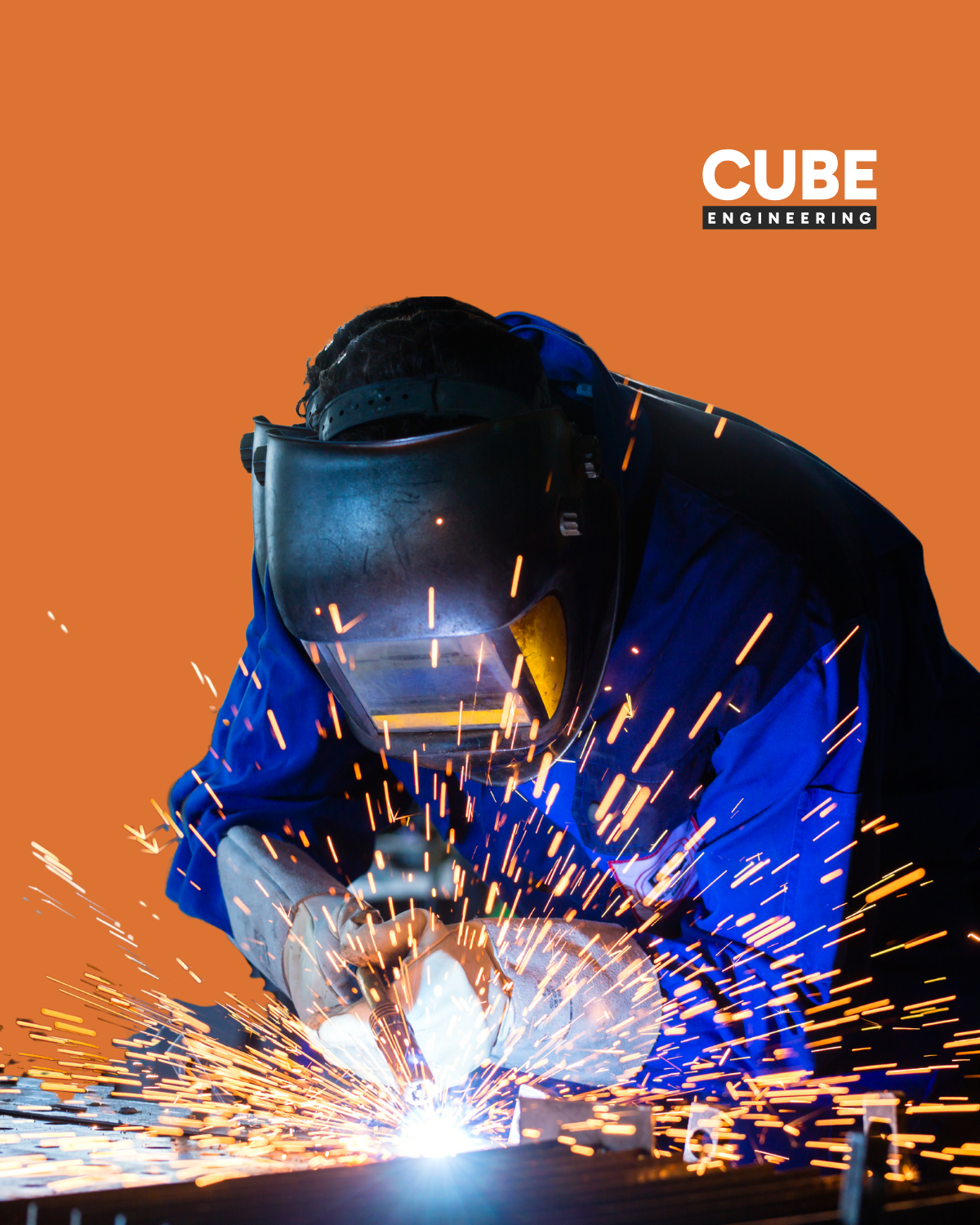
During welding, the material is heated intensely over a relatively small area. The section near the weld rises in temperature and expands while the rest of the structure remains much cooler. Cooling begins after the weld is completed, and the heated material starts to contract. Because different parts of the structure heat and cool at different rates, stresses arise in the material. If they are large enough, they can permanently alter the component’s geometry. The result? A frame is no longer rectangular. Sheet metal starts to bend. A section moves out of position. The larger the structure and the stricter the accuracy requirements, the greater the risk that corrections will be needed during welding.
How can welding distortion be reduced?
There is no single method that works in every situation. The best results come from combining several measures.
1. Prepare components accurately
Before starting work, check the dimensions, angles, gaps and position of every part. The more accurately the component is prepared, the fewer corrections will be required during welding.
2. Plan the welding sequence
Do not start at a random point. For larger structures, it is worth defining the welding sequence in advance so that the effects of contraction are balanced as far as possible. Depending on the structure, symmetrical or alternating welding, or dividing long runs appropriately, may help.
3. Limit excessive heat input
The welding parameters and technique should suit the material, thickness and joint type. Weld geometry also matters: making a weld larger than required can increase contraction and the risk of distortion.
4. Use suitable clamping
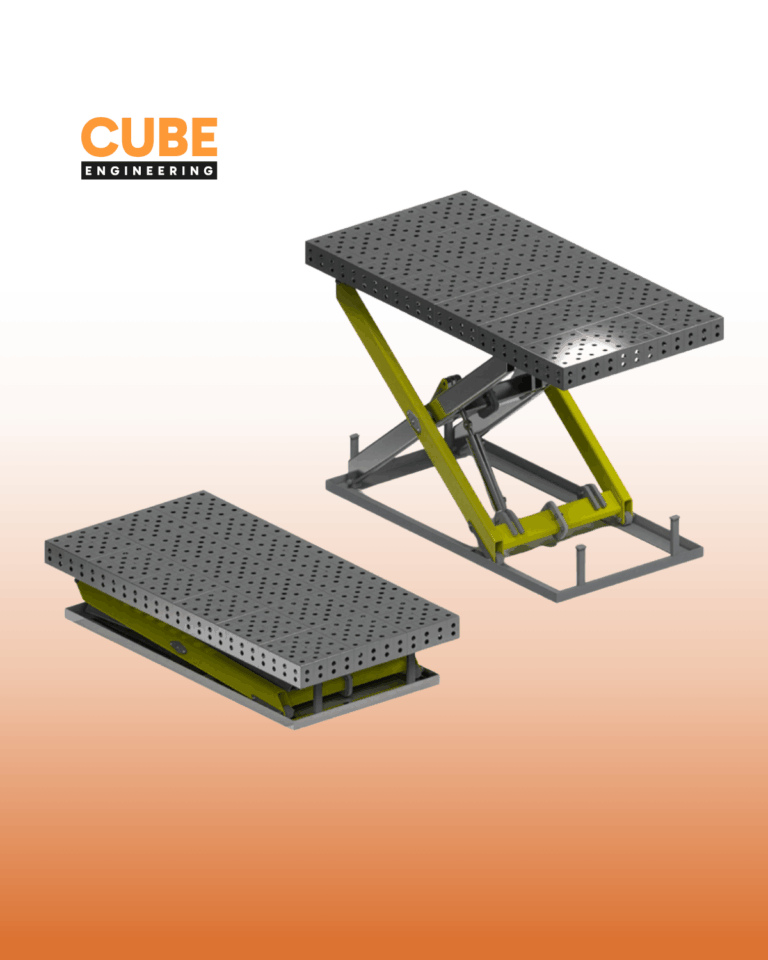
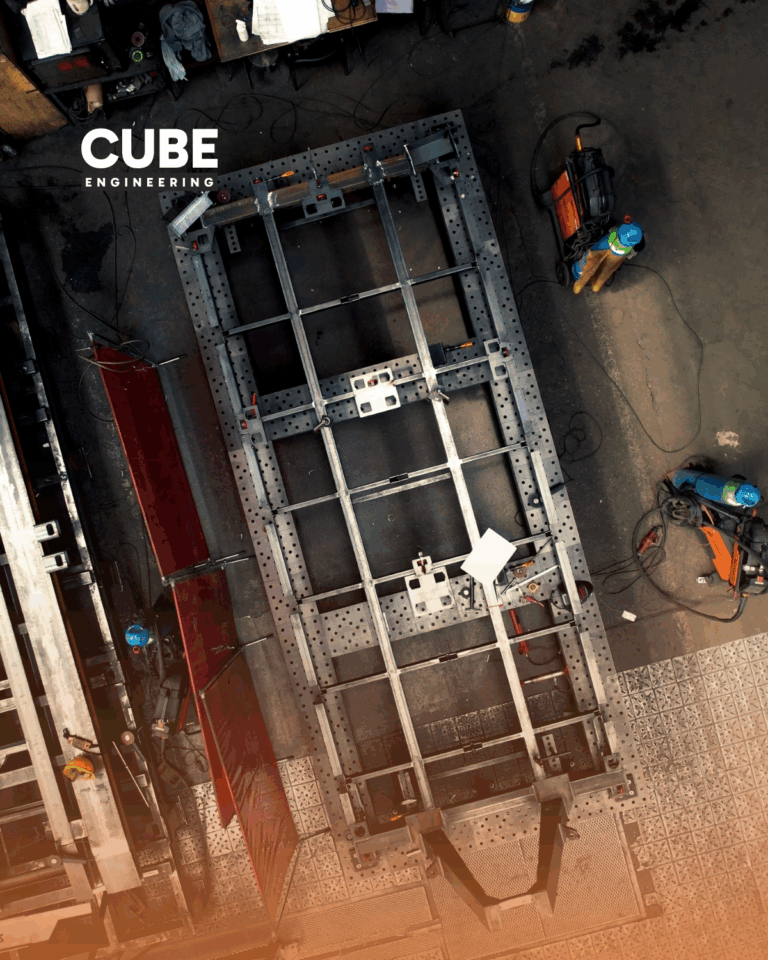
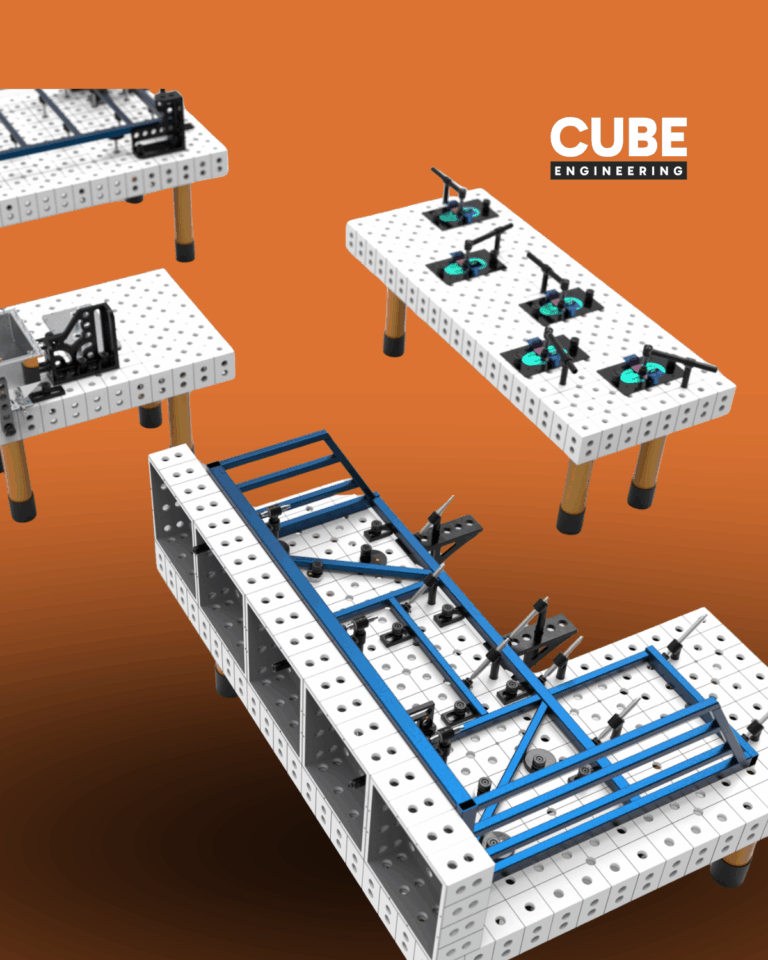
The component should be stable and in the correct position before welding begins. Modular welding tables are useful because they allow the workstation configuration to be changed quickly without building a separate fixture for every new component.
5. Check geometry as you work
Do not wait until the final weld is complete before taking measurements. For more demanding structures, checking dimensions between successive stages allows geometric changes to be detected earlier and the appropriate action to be taken.
How does CUBEWELD help create a stable welding station?
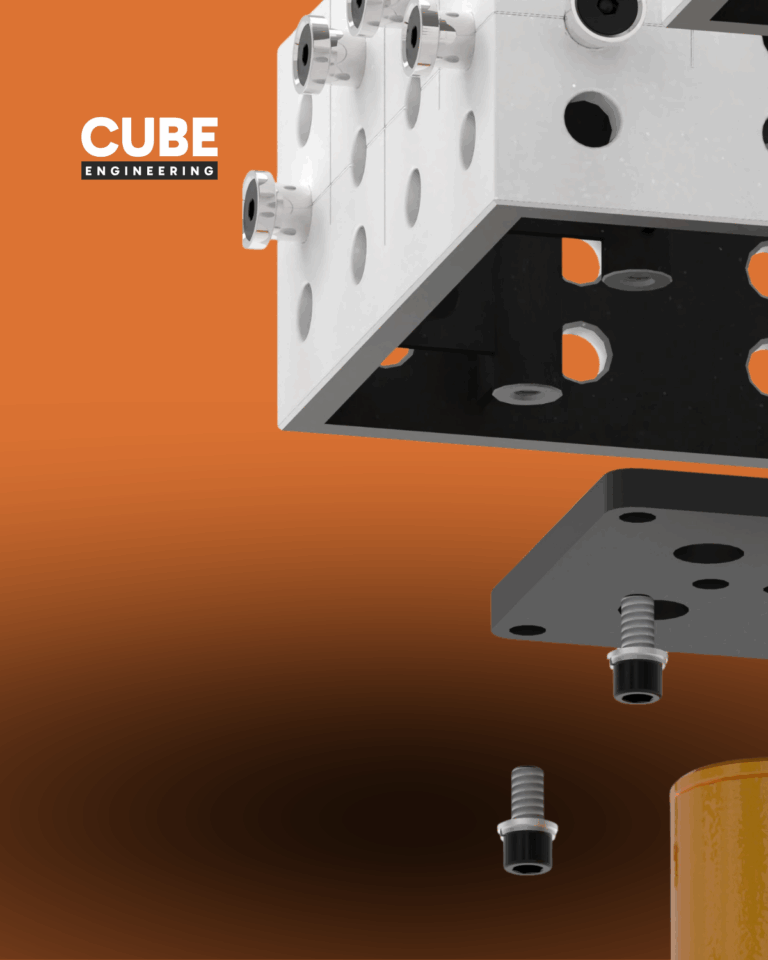
CUBEWELD is a modular welding table system designed to create a workstation tailored to the structure being fabricated. It is based on modules that can be assembled in various configurations, so the station is not restricted to a single, fixed tabletop size. In practice, this makes it possible to prepare a surface suitable for a particular component and use system components to position and clamp it.
This is particularly important for companies undertaking:
– one-off production,
– short and medium production runs,
– structures of varying dimensions,
– frames and three-dimensional structures,
– projects that require frequent workstation changeovers.
Stability starts with the table itself
If a table is to serve as the reference surface for building a structure, its own geometry also matters. CUBEWELD therefore uses, among other things, the DSR – Double Stress Relief process: two-stage thermal stress relieving of the table components. Its purpose is to reduce stresses created during earlier processing stages and improve the geometric stability of the working surface.
Fewer corrections begin before welding
Welding distortion is a natural consequence of locally heating and cooling the material. That does not mean, however, that every deformation of the structure must be accepted.
The final result is influenced by factors including:
– the structural design,
– component preparation,
– positioning,
– clamping,
– the welding sequence,
– process parameters,
– geometry checks.
The more control we have over each of these stages, the greater the chance of achieving a repeatable result. Geometry problems should therefore not be addressed only when the completed structure reaches the straightening station. It is much better to begin earlier, with proper preparation of the process and workstation.
Are you building structures that must remain true to size?
If you fabricate frames, steel structures or series of repeat components, a properly configured workstation can make them significantly easier to position and clamp. The CUBEWELD range includes:
– modular welding tables,
– complete table sets,
– clamps and hold-down clamps,
– angle brackets,
– stops and positioning components,
– accessories that allow you to build a workstation tailored to the components being fabricated.
View complete sets for professional welding stations: https://cubeweld.co.uk/product-category/welding-tables-and-tool-sets-en-gb/
Not sure which configuration is right for your structures? Contact us and select a system that suits the type of components you fabricate and your production method.
+48 697 69 1111
+48 697 69 2222
info@cubeweld.pl